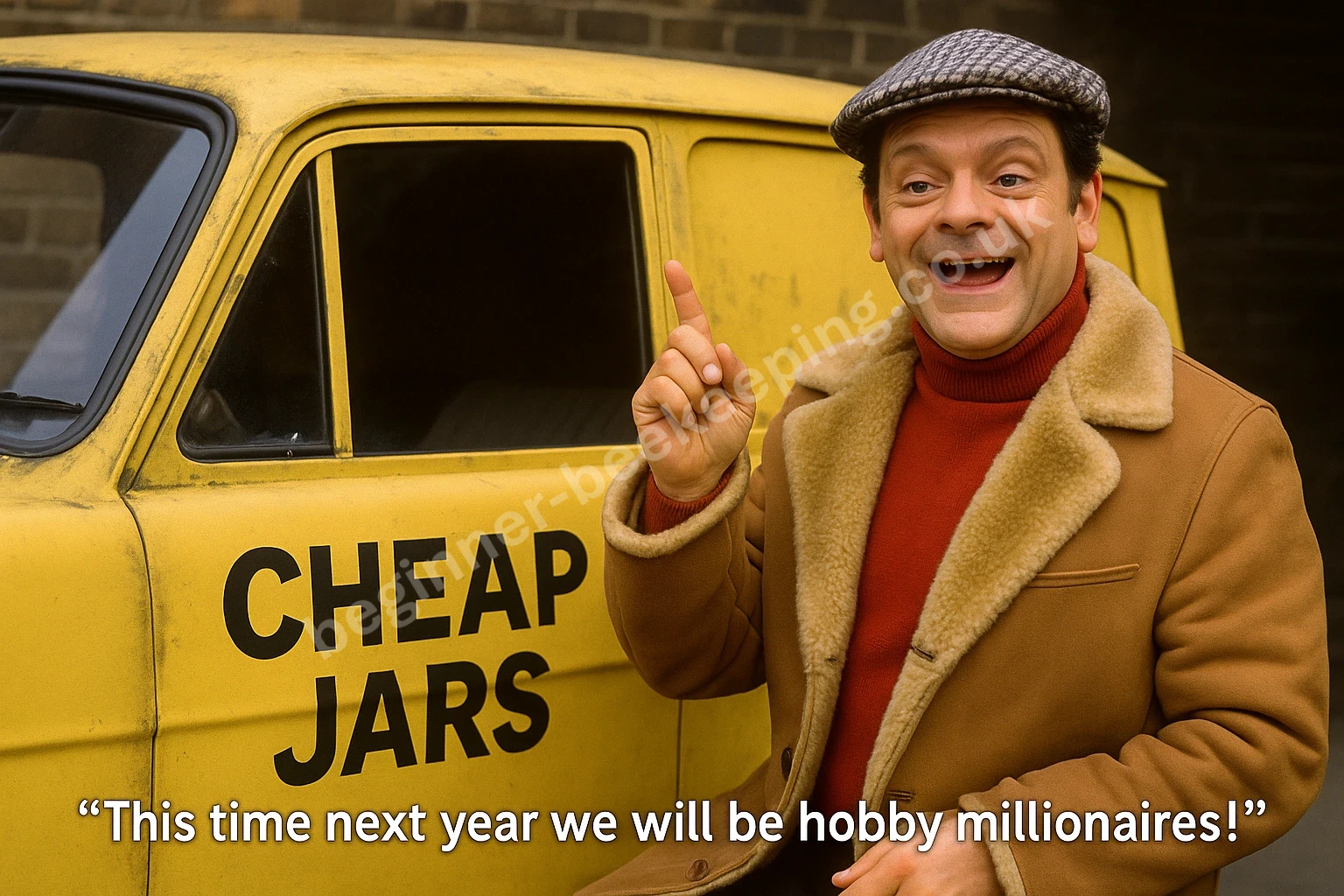
Pricing honey is one of the most misunderstood aspects of beekeeping. To the average consumer, a jar of honey is just a jar of honey – often compared purely on price. But behind every label is a complex web of costs, quality differences, and a market that sometimes feels stacked against genuine producers.
The Uneven Playing Field
In a recent discussion among beekeepers, one producer shared a telling story: a delivery driver mistakenly took his order of jars to a local beekeeping association instead. The association, which operates as a “charity,” was buying jars at a significantly lower price than any independent business could manage.
As he put it, these groups “aren’t really charities – they’re trading bodies,” benefiting from bulk discounts and resale arrangements that private producers can’t access. For small-scale commercial beekeepers, that translates into a competitive disadvantage before the honey even hits the shelf.
Another beekeeper noted a similar frustration: “Our local association can buy by the pallet” When those bulk buyers resell supplies at cost (or even with a small mark-up), it keeps hobbyist production cheap and the retail market artificially low.
The Hidden Costs of Doing It Right
True honey production involves more than just harvesting and bottling. It requires hygiene inspections, proper labelling, food safety training, compliant packaging, and often third-party audits. Commercial producers also bear the full cost of compliance – something not all sellers do.
One beekeeper described attending a local honey tasting where some of the jars on display were “bubbling away” – a clear sign of fermentation. “Some of it was foul,” they said, “but labelled for sale anyway.”
These stories highlight an uncomfortable truth: while commercial producers invest in ensuring their honey is safe, traceable, and of consistent quality, not every jar on the table goes through the same scrutiny. Yet consumers rarely know the difference.
Competing with Hobbyists and Imports
Adding to the challenge, small commercial beekeepers often find themselves competing not only with hobbyists selling at near-cost but also with imported honey priced at unsustainably low levels.
One beekeeper explained how a long-term retail partner suddenly stopped buying his clear honey, opting instead for “a large amount of cheaper honey from a hobbyist.” The undercutter wasn’t inspected and sold from home – but the shop saw the lower price and made the switch.
As another bee farmer put it, “How many other industries compete with amateurs who have another income stream?”
Understanding Value Beyond the Price Tag
For the consumer, it’s tempting to judge honey purely by its cost. But a £6 jar from a commercial beekeeper often represents more than the contents inside – it covers the cost of regulation, insurance, compliant packaging, inspections, ethical practices, and the hard reality of keeping bees alive through unpredictable seasons.
Meanwhile, a £3 jar from a hobbyist might taste fine but may not have been through the same level of oversight, hygiene, or traceability. That doesn’t make the hobbyist dishonest – but it does mean the products aren’t comparable in terms of what goes into making them.
Towards a Fairer Understanding
The honey market needs a more informed conversation between producers and consumers. Transparency in sourcing, labeling, and production practices could help bridge the gap. Associations and trade bodies could also do more to differentiate commercial compliance from hobby activity, allowing consumers to make choices based on value rather than price alone.
Until then, many commercial beekeepers will keep doing what they’ve always done – producing high-quality, traceable honey at a fair price, even if not everyone understands what that price really represents.