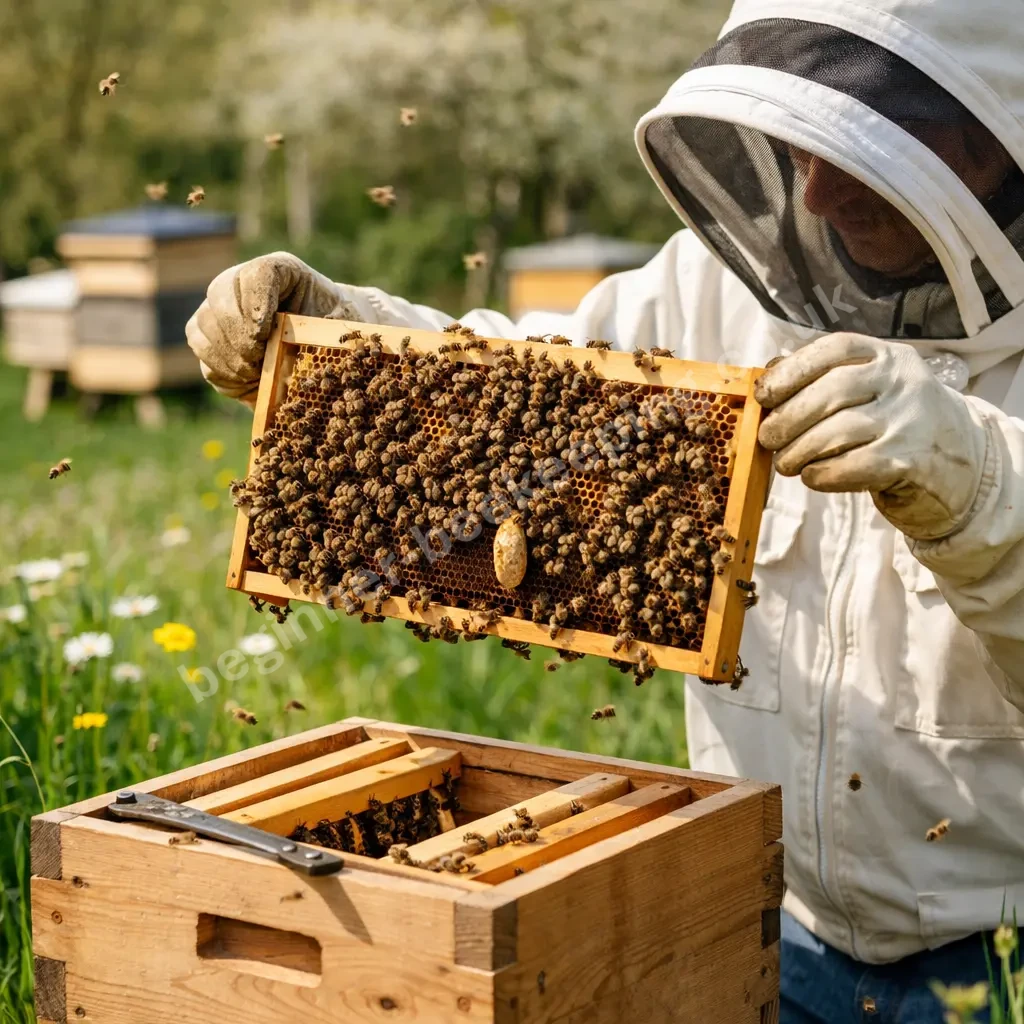
Introduction
If you’re looking for a bee split method that’s simple, cost-effective, and sustainable, this guide will walk you through a proven approach used at scale. Instead of relying on bought queen cells, you can work with your bees’ natural instincts to raise strong queens and build thriving colonies.
This method is similar in principle to the popular two frame nuc method, but simplified further and adapted for sustainability and scalability.
Why Rethink How You Make Splits?
Many beginner beekeepers are taught to make splits using multiple frames and purchased queen cells. While this works, it can quickly become expensive and labour-intensive.
A more natural system focuses on:
- Fewer resources per split
- Letting bees raise their own queens
- Reducing interference
- Scaling colony numbers sustainably
Large-scale operations have shown that even single-frame or small nuc splits can grow into full colonies within one season when done at the right time of year .
The Core Idea Behind This Bee Split Method
At its heart, this bee split method is about doing less – but doing it at the right time.
Instead of:
- Buying queen cells
- Constant inspections
- Heavy manipulation
You:
- Take a small amount of brood and bees
- Encourage strong colonies to produce swarm cells
- Let the bees raise and mate their own queens
This mirrors how bees naturally reproduce in the wild.
Step-by-Step: A Sustainable Split Method
1. Start Early in the Season
Timing is everything. Begin in late April to early May when colonies are expanding quickly.
Strong colonies should:
- Be crowded
- Have plenty of brood
- Show signs of wanting to swarm
2. Force Swarm Cell Production (Naturally)
Instead of buying queen cells, you can encourage your best colony to produce them.
How to do this:
- Lightly condense the brood nest (reduce space temporarily)
- Ensure plenty of young bees
- Feed light syrup to simulate a nectar flow
This combination encourages the colony to start swarm cells naturally—giving you high-quality queens from your best genetics.
“Condensing the brood nest” sounds complicated, but it’s really just about making the colony feel a bit crowded – without harming it.
You’re not squashing bees or doing anything drastic. You’re simply tightening up the space so the colony thinks:
“We’re running out of room… time to reproduce.”
Step-by-Step
1. Open the hive and find the brood area
Look for the frames with:
- Eggs
- Larvae
- Sealed brood
This is your brood nest (usually in the centre of the hive).
2. Remove empty or unused space nearby
Take out:
- Empty drawn comb with no brood
- Frames that are barely being used
- Excess foundation
You’re aiming to remove the “spare room” feeling.
3. Push brood frames closer together
Gently move the brood frames so they sit tightly together in the middle.
Think:
- No big gaps
- A compact block of brood
4. Reduce the overall box space (if needed)
If the colony is in a large box but not filling it:
- Remove a frame or two
- Or use a dummy board
This helps concentrate heat and activity.
5. Feed lightly
Give a small amount of syrup (not loads):
- Mimics a nectar flow
- Encourages brood rearing
- Helps trigger swarm instinct
What You’re Trying to Achieve
You want the bees to feel:
- Busy
- Productive
- Slightly crowded
That combination encourages them to start swarm cells, which you can then use for your splits.
What NOT to Do
- ❌ Don’t remove brood frames (you’ll weaken the colony)
- ❌ Don’t overdo it – this isn’t a crush
- ❌ Don’t leave them with no space at all
- ❌ Don’t keep fiddling every few days
Simple Way to Remember It
👉 “Tidy up, tighten up, then leave them alone.”
3. Create Small Splits (1–2 Frames)
Similar to the two-frame nuc approach, but you can go even lighter.
For each split:
- 1 frame of sealed brood (with bees)
- 1 frame of stores or drawn comb
- Add foundation if needed
- Shake in extra bees if the colony is small
This minimalist approach allows you to create more splits from fewer colonies.
4. Add a Queen Cell
Once your donor colony produces swarm cells:
- Carefully transfer one good, sealed queen cell into each nuc. This could be a cut out cell or a frame transfer.
This removes the need to purchase queen cells entirely.
5. Feed and Leave Them Alone
After setting up your nuc:
- Feed around 1–2 litres of syrup
- Place in a sheltered apiary (away from parent colonies). Ideally, move the nucs to another apiary to prevent flying bees drifting off back to the parent hive and to prevent robbing.
Then do something many beginners struggle with: leave them alone for 3–4 weeks
Minimal interference improves:
- Queen mating success
- Colony stability
- Overall development
6. Assess and Expand
After a month:
- Check for a laying queen
- Remove failed nucs
- Give successful ones more space
Strong nucs can quickly build into full colonies within the same season.
Why This Method Works
This approach aligns closely with how bees naturally operate:
- Colonies want to swarm and reproduce
- Young queens reduce swarming pressure
- Minimal disturbance improves productivity
In fact, systems built around young queens and simple splits often report:
- Lower swarming rates
- Strong honey production
- Healthier colonies overall
Sustainability Benefits
This bee split method is especially valuable if you want a more sustainable apiary:
- No need to buy queen cells
- Locally adapted genetics
- Lower costs
- Reduced transport and intervention
It also encourages you to select from your best-performing colonies, improving your bees year after year.
Tips for Beginners
- Start small: try 2-3 splits in your first season
- Always use your strongest colony as a donor
- Don’t over-inspect: trust the process
- Keep good records of which colonies perform best
Final Thoughts
If you’re comfortable with the two-frame nuc approach, this next step – using natural swarm cells – can simplify your beekeeping even further.
By working with your bees instead of against them, you can build a sustainable system that grows year after year with less effort and cost.